Showing posts with label Freshwater Fish. Show all posts

Aquarium Decorations Creating Homes For Fishes

Monday, August 1, 2011
Aquarium decorations are not only gorgeous to look and feel at they also have an significant purpose. They present fishes with households - hiding places and all natural borders resembling their all natural habitat. There are countless diverse kinds of decorations, for instance Cave dwelling fishes take pleasure in aquarium decorations that construction like caves, holes and crevices. While Fishes that reside in dense vegetation like plants and other sorts of small hiding sites. Decorations are necessary for a delighted and healthy and balanced aquarium they also continue to keep fishes from gaining bored.

Tanks: There are many variants of tanks massive, small-scale, quadrilateral or polygonal. The dimension of an aquarium should really be in accordance to the dimension and the range of fishs you strategy to continue to keep. Also tanks arrive in a wide range of tinted eyeglasses.

Crops: With good maintenance and regular pruning they are the the most wonderful and inexpensive supply of decoration for your aquariums. Fishes really like the aquatic vegetation as they are component of their natural habitats. They arrive in all types, costing anyplace from a very few bucks to hundreds. Aquatic plants are especially practical as clearly they bind carbon dioxide and oxygenate the water. They also use natural and organic waste products and solutions as nutrition and eradicate likely unhealthy compounds from the water. Plants can also be chosen to preserve a test on the water quality of an aquarium the plant will initiate dieing in advance of the fish if the water abruptly gets to be poisonous
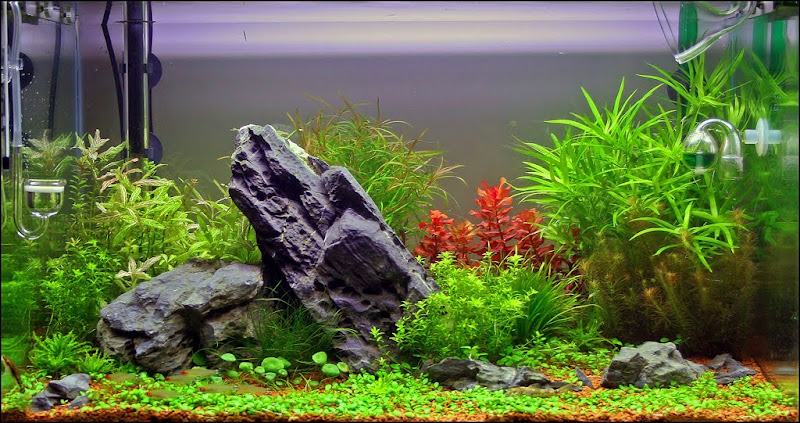
Aquarium Decorations Creating Homes For Fishes
Wooden, Rock and Coral: An aquarium can be like a miniature true habitat for the fishes with these decorations. Drift wooden and mangroves can make a attractive influence in the aquarium, as well as some fishes in particular thrive on Drift wood. But be mindful as Drift wood may reduced pH ranges and the hardness of the water. So it is greatest employed in aquariums with gentle slightly acid water. Stones and rocks make fantastic decorations. But all over again caution is needed you really should by no means use rocks that influence your water's pH amounts or stones that may perhaps consist of toxic compounds. There are also fake rocks that resemble true rocks, but these are fairly high-priced. Rocks can be implemented to produce caves which lots of fishes are passionate about. Coral are a attractive addition to marine aquariums in reality they could possibly prove crucial for a healthy and balanced marine habitat. But can be dangerous to contemporary freshwater aquarium and need to not be put into use as they be unhealthy.

Gravel or sand: The two are good each arrive in a selection of colour. Gravel comes in white, brown and black, or blue, red, green, yellow the full rainbow spectrum. Sand all over again also has a plethora of shades white, black, blue, yellow, red, green. Both of these can be layered in multiple hues.

Glass marbles, Ceramics, Plastic: Ok all are unnatural components and may well search marginally tacky, but fishes will not give a fig for this, they enjoy them enormously. Glass marbles even though are not a great bottom substrate out of a biologically as flora does not thrive on them, can include fabulous shades to the aquarium. It's most effective to use them sparingly or create an alternative a lot more practical substrate down below. Ceramics are wonderful aquarium decorations. All dimensions and shapes can be used as prolonged as they do not have sharp edges. On the other hand ceramics tend to grow algae that could be tough to. Plastic they are low-priced, colourful and yes tacky, but can be uncovered in a variety of fun designs. Treasure chests, skulls, divers, pirates, crops and ships you title it and suppliers have them.

It is essential that you only use aquarium decorations that are harmless to use in aquariums. If you have salt water aquariums they really should be saltwater-reliable also. If you do not take this precaution your tropical fish will die due to the organisms and toxic compounds launched by the decorations.

Aquarium decorations have both useful and aesthetical use if carried out tastefully and cautiously you can make a miniature aquatic ecosystem that both you and your fish can appreciate.
Read more »

Assorted Veil Angelfish (Pterophyllum scalare)

Tuesday, July 19, 2011
Assorted Veil Angelfish Pterophyllum scalare PicturesAssorted Veil Angelfish are an assortment of strains of the long finned varieties, and are available in an adult size. These fish may include marble veils, gold veils, or silver veils, and will add drama and brilliance to the passive community aquarium. These type of angelfish prefer a well-planted tank of at least 30 gallons with soft, slightly acidic water. Rocks and driftwood can be added to the aquarium, but leave plenty of space for swimming.

It is best, when trying to breed the Angelfish, to house a number of angels in the same aquarium until they pair off. After a pair has developed, a flat surface needs to be provided where the eggs can be laid. A piece of slate, a large plant leaf, or even a flowerpot should be positioned at an angle of about 30 degrees in an area of moderate water flow. The female will lay the eggs and the male will follow behind to fertilize. After approximately three days, the eggs will hatch and the fry will emerge. Feed the fry newly hatched brine shrimp until large enough to accept crushed flake food.

The Assorted Veil Angelfish needs to be fed a variety of foods including vegetables as well as meaty foods. Feed a quality flake food as well as live and frozen foods such as brine shrimp and bloodworms.
Read more »

Keeping Dwarf Neon Rainbowfish

Friday, June 10, 2011
Melanotaenia Praecox Neon Rainbowfish PhotoThe Melanotaenia praecox is an active, beautiful and hardy fish. The Praecox Rainbow, otherwise known as the Dwarf Neon Rainbow, is a peaceful schooling fish. Such as Boesemani rainbowfish, Melanotaenia praecox also known for their characteristic large eyes, black or silver band that runs through the middle scale rows, deeply forked mouths, and two dorsal fins. Males are smaller and narrower and have more of the silvery bluish tinge in their bodies and more orange in their fins. The females are larger and have more yellow in their fins.

Keeping Dwarf Neon Rainbowfish in a big school at least groups of five to seven is the best way but this also means larger tanks are more suitable for this fish - 100 liters and above. An aquascape aquarium with plenty of free swimming places available will provide a good environment for Melanotaenia praecox. A dark colored gravel substrate may intensify the Praecox Rainbow's colors. This is an active, beautiful and hardy fish. Regularly do a 20% water change without even adding anti-chlorine and they seem to cope very well with it.

Freshwater Aquarium Melanotaenia Praecox Neon RainbowfishFreshwater Aquarium Melanotaenia Praecox Neon RainbowfishFreshwater Aquarium Melanotaenia Praecox Neon RainbowfishThe Praecox Rainbow is a freshwater fish for planted aquarium and an egg layer that spawns over a moss substrate. At a temperature of around 75°F, the fry will hatch after six or seven days. Adults should be removed from the fry after hatching. Fry should be fed small pieces of live foods such as brine shrimp.

Schooling Melanotaenia Praecox Neon Rainbowfish SpeciesSchooling Melanotaenia Praecox Neon Rainbowfish SpeciesSchooling Melanotaenia Praecox Neon Rainbowfish SpeciesAlthough Praecox Rainbows have large mouths, their throats tend to be narrow. With this in mind, foods should not be too large. The Praecox Rainbow should be fed an omnivorous diet of prepared flakes, frozen, and live foods.

They seem happy in my very hard water and at pH 8.0, and they enjoy flake, bloodworms, and brine shrimp. I recommend praecox rainbows to anyone with a smaller sized peaceful community tank, because they are gorgeous, hardy, not as large as other rainbowfish species, and they don't have any special requirements. A good freshwater tropical fish for beginners!
Read more »

Freshwater Fish Melanotaenia Boesemani Rainbowfish

Saturday, June 4, 2011
Freshwater Aquarium Fish Melanotaenia Boesemani Rainbowfishes SpeciesThe Boesemani Rainbowfish also called the " Melanotaenia boesemani " fish is a nice little creature belongs to the family Melanotaeniidae (Rainbowfishes) and creates a colorful centerpiece for any freshwater home aquariums. Firstly described by Allen and Gross in 1980, Boesemani Rainbowfish is a peaceful and very active schooling fish, so its something to be remembered when planning your tank population.

Boesemani Rainbow males have a beautiful bluish purple head that fades into a gorgeous orange and yellow posterior. Though females are not as colorful, their brilliant silver coloration is equally as stunning against any backdrop of plants or rockwork. Regardless of sex, however, Melanotaenia boesemani boasts the same distinct characteristics as other Freshwater Rainbowfish, including large eyes, a deeply forked mouth, and dual dorsal fins. Like many members of the Melanotaeniidae family, the Boesemani Rainbow also boasts the characteristic blackish-silver band of scales running laterally from gill to tail.

This peaceful Rainbow is an active shoaling fish that does best in a planted aquarium with plenty of room to swim. The uses of dark gravel subtrate may aid in intensifying the colors of the Boesemani Rainbowfishes. When maintaining a school of Boesemani Rainbow, an aquarium that is at least 4 feet in length should be used. The only complaint reported is about their habit of nipping the Hygrophila polysperma. Occasionally, their displays to each other can be a bit violent and involve nipping each other's fins.

Freshwater Aquarium Fish Melanotaenia Boesemani Rainbowfishes SpeciesMelanotaenia boesemani is a great fish that mingles well with other Rainbowfish species. Males display the best colors while spawning. They can tear fins and damage scales during the courting so it's best to have 2 males per female so not all the attention is heaped on the female (Males will chase each other as well as the poor female). They will rarely stress each other enough to cause any serious harm but care should be taken to check for Fungus and Childonella which can attack the spawning fish. Make sure you give them a suitable spawning mop or aquarium plants (Java ferns work well).

Melanotaenia boesemani may also spawns on moss throughout the course of several days. The fry hatch after six or seven days and require small pieces of live food and you should have a fry raising tank ready after the egg are attached. Good water conditions, good tank current and the use of spotlights (Which also highlight some amazing colors) to simulate Dawn/Dusk will encourage spawning.

Although Boesemani Rainbows have large mouths, their throats tend to be narrow. Offer foods that are not too large. The Boesemani Rainbow is an omnivore and should be fed a mixed diet of prepared flakes, frozen, and live foods. They are truly a sight to behold. Their colors are truly magnificent, maybe because of the regular feeding with live and frozen food, as well as flake food. These rainbows are almost fully grown, and if you see them swimming together it is stunning. When they are young in the petshop the colors have not yet developed to the fullest. If you do get them, be patient since they are slow growers, but the wait is worthwhile, there is nothing more beautiful than a group of fully matured boseman rainbow fish.
Read more »

Freshwater Fish Red Irian Rainbowfish

Tuesday, May 31, 2011
Freshwater Red Irian RainbowfishesOne of the most popular Rainbowfish species, the Red Irian or Red Rainbow has brightly colored males and silvery females. A male fish, without a female present, may become duller in color. The freshwater tropical fish species - Glossolepis incisus was scientifically described by Weber in 1908. Around Lake Sentani in West Papua and several other lakes on the island of Irian Jaya, Red Rainbowfish is an appreciated food fish. Glossolepis incisus also known by their characteristic large eyes, black or silver band that runs through the middle scale rows, deeply forked mouth, and two dorsal fins.

Red Irian rainbow is a fish with characteristics of the conciliator and is ideal for aquarium aquascaping because the contrast of colors in an aquarium. Some aquarist usually put some aquarium fishes (to form a group). Ideally this schooling fish should be housed in a live planted aquarium, but not too densely planted that there is insufficient free-swimming space as these are active fish. The ideal aquarium is the presence of water movement in the form of stream water is relatively calm. The Red Iran Rainbow also requires a gravel substrate and you may find that their colors intensify with a dark colored gravel.

Provide your Red Rainbowfish with a good aquarium filtration system and a varied diet in the aquarium. Getting the Red Rainbowfish to eat in captivity is certainly not hard. Although Red Irian Rainbows have large mouths, their throats tend to be narrow; small foods should be fed. An omnivorous diet of prepared foods and plenty of live foods are best for the Red Iran Rainbowfish.

Tropical Red Irian Rainbowfishes for Freshwater Aquarium Plants
Breeding Red Rainbowfish

Rainbow red fish is a type of Rainbowfishes that is easy to be cultivated. Distinguishing between male and female of the red rainbow that is very easy to see color scales / her body. The Red Irian Rainbowfish can exceed 14 cm in length. The adult males are more colourful than the adult females and sport a vibrant shade of bright red over the body.

In aquariums, the Salmon-Red Rainbowfish is normally bred in groups or trios (1 male + 2 females). If you want to coax your Red Rainbowfishes into spawning, keep them in a well planted aquarium and include densely grown java moss or spawning mops in the set up. An egg layer, Glossolepis incisus spawns throughout a number of days over java moss.

Feed Red Rainbowfish more live food than normal. A female Red Irian Rainbowfish can release up to 50 eggs per day, but most females releases a much lower number of eggs. Never allow the container to become crowded; set up new containers as the fry grows bigger. The adults Glossolepis incisus should be removed after spawning and the eggs should be raised and hatched separately. The fry should be fed very small live foods.
Read more »

Freshwater Fish Axelrods Rasbora - Sundadanio axelrodi

Wednesday, May 25, 2011
Axelrods Rasbora - Sundadanio axelrodi Fish TypesThe Axelrod Rasbora is a peaceful, active, schooling fish and it's a great addition to densely your freshwater aquarium plants with other small and peaceful species. This tropical aquarium fish is one of the more brilliantly colored species of the genus, especially the male. Interestingly, the fish is not actually a Rasboras type, and is more closely related to Danios, as well as the Galaxy Rasboras type.

Rasbora axelrodi needs a well-established. They will not do well if kept in bright, open spaces, and most fish over 6cm will be large enough to cause stress or eat these little fish. Therefore, the Axelrods Rasbora is only suited to a few aquariums and looks best in heavily planted nano-tanks.

Keeping the Axelrods Rasbora in groups of six or more, included provide soft, acidic water along with a darker substrate or dark areas will make the fish healthy and has a powerful colour. The fish are active and seem to enjoy areas with a little flow as well as quieter spots. However, it is also said to make a croaking noise when shocked or removed from water.
Axelrods Rasbora Sundadanio axelrodi PhotoAn omnivore, this Rasbora does well on a diet of prepared flake food, as well as freeze-dried bloodworms and tubifex. Whilst the normal colour strain of this fish has a blue upper body and red mid-lower body, there are a number of colour morphs of this species, including blue, red, and green varieties. Males are generally more colourful and may have darker anal fins. Unfortunately, the Axelrod Rasboras breeding habits in the aquarium have not been documented and because this fish needs a specific environment and good water quality to thrive, it is not a beginner species.
Read more »

Freshwater Fish Galaxy Rasbora Microrasbora sp

Freshwater Fish for Aquascape Aquarium Rasbora Galaxy RasborasThis is still relatively a brand new freshwater fish species, only first discovered in 2006. It was also recently renamed from "Galaxy Rasbora - Microrasbora sp." to "Celestial Pearl Danio - Celestichthys margaritatus." Due to bright coloration and small size, the firework Rasboras type become a perfect addition to a planted nano aquarium.

The Galaxy Rasbora fish was found in a very small high altitude area in Myanmar, and instantly became very popular as an aquarium fish. Unfortunately, over collecting has devestated its environment, and the fish has become very rare in its natural location. Due to problem has advanced so quickly therefore the Practical Fishkeeping Magazine has urged fishkeepers to only purchase the fish if they intend to breed them. However, given demand, it is more likely a case of if mass-scale breeding is not employed, the species is likley to dissapear. Although the tropical fish retailer near you may not know if the fish they stock are captive bred, it is worth asking before purchasing, and certainly avoid any wild caught stocks if possible.

Tropical Fish for Aquarium Plants Rasbora Galaxy Rasboras
Galaxy Rasbora is similar to other danios in habits and shape. The males are much more brightly colored than the females and have a deeper blue coloration with much more red on the fins. As well as Harlequin Rasboras, Galaxy Rasboras are a shoaling fish, so keep in groups of 6 or more. The fish is generally easy to care for and has no specific requirements. Although they prefer soft, acidic water, they can be acclimated to harder water. Captive bred fish which are a few generations old, may be adaptable to a wider range of conditions. Keep with other small, peaceful, species and provide hiding spots, ideally amongst vegetation. Small live or frozen foods such as daphnia or cyclops will help keep the fish in top condition. Like almost any freshwater aquarium fish, Galaxy Rasbora will be much healthier and happier with live aquarium plants.
Read more »

Freshwater Fish Harlequin Rasbora

Tuesday, May 24, 2011
Freshwater Aquascape Fish Rasbora PhotoThe most interesting types of Rasboras is Harlequin Rasbora (Trigonostigma heteromorpha). The specific name "heteromorpha", was translating from the Greek as "differently shaped". The freshwater tropical fish species native from Southeast Asia is an extremely desirable aquarium addition thanks to its gorgeous metallic coloration and ease of care. It's not difficult to see why so many hobbyists treasure Harlequin Rasbora . A large school of Harlequin Rasboras with the size up to 5 cm fill the upper areas of the aquarium. The movement and color so lively and vibrant that even non-hobbyists marvel at the display.

A member of Cyprinidae family, Harlequin Rasbora is easily identified by its characteristic black "pork chop" shaped patch and beautifully lustrous copper/orange body. The distinguishing triangular patch begins near the dorsal fin and comes to a point near the base of the caudal fin. The patch on the male Harlequin Rasbora is slightly rounded at the bottom with an extended tip. In contrast, the patch on the female Harlequin Rasbora is straight. The female Harlequin Rasbora is also larger than the male.

The Harlequin Rasbora does best in an established planted aquarium with open areas for swimming. The Harlequin Rasbora should be kept in schools of 8-10 individuals and housed with other small, peaceful fish. The tanks should be decorated with plenty of room to swim and hide; plants can be used as shelter too. This beautiful freshwater tropical fish for aquascape will benefit from soft water. The mild nature of the Harlequin Rasboras makes it a great community fish.

Freshwater Tropical Fish Rasbora Profile
For Rasbora heteromorpha generally spawns on the undersides of broad-leaved plants. A breeding tank with shallow, warm, acidic, soft water with broad-leaved plants should be set up. To encourage spawning, pair a young (9-12 months old) female Harlequin Rasbora with a two-year old male and offer live food items. After spawning, remove the parents and keep the aquarium dark until the eggs hatch (after about 24 hours). Feed the fry infusoria.

Omnivore, in the wild the Rasbora harlequin feeds on aquatic invertebrates and small insects in captivity it will accept almost everything offered, flake food, frozen food and freeze-dried food. Feeding should be provided at least two times a day.
Read more »

Freshwater Fish Neon Tetra Paracheirodon innesi

Monday, May 23, 2011
Freshwater Tropical Fish Neon Tetra Paracheirodon innesiIn addition to the popular Cardinal Tetra and the exotic Gold Neon Tetra, some freshwater fish species of the Characidae family pretty much kept and bred - including Neon Tetra which is popular first among the aquascapers world. Small sized, the body length can reach about 3 cm.

Paracheirodon innesi which comes from Colombia, Peru, and Brazil is often described as the jewel of the freshwater aquarium hobby. It is easy to see why Neon tetra is one of the most popular freshwater tropical fish species for aquascaping. With their iridescent blue bodies and bright red tails, Paracheirodon innesi creates an exciting splash of color in any aquarium, especially when kept in schools of six or more.

Native to the clear water streams of South America, Neon tetra prefers densely planted systems with plenty of low light areas to hide. To best recreate its natural habitat, place rocks and driftwood amongst the plants for added areas of refuge. However, the Paracheirodon innesi will tend to swim or remain suspended in the water column in schools to create a breathtaking display of color. Extremely peaceful, the Neon Tetra should be kept with similarly non-aggressive tankmates of a similar size.

Neon Tetra Paracheirodon innesi
As the member of the Characidae family, Neon Tetra thrives in the slightly acidic water with stable water parameters. Separate a pair of Tetra fish into a "breeding tank" with no lighting at first usually done by the breeders to breeding Neon Tetras. They also gradually increase the lighting until spawning occurs and for the optimal results. Another thing to note regarding the breeding of Neon Tetra - the water hardness should be less than 4 dH and live foods such as mosquito larvae are great inducers. Be sure to remove the adults after the eggs have been laid, as the adults will eat them. The eggs should hatch within 30 hours.

Water quality is a matter that should be in maintaining the Neon Tetra. Common diseases of Tetra fish species such as White Spot or Ich usually caused by the poor water quality. In addition to the regular aquarium water replacement, add the methylene blue into aquarium water to protect Neon Tetra from the white spot disease.
Read more »

Freshwater Fish Gold Neon Tetra

Freshwater Fish Gold Neon TetraThe Gold Neon Tetra also known by the name Blue-Lined Albino Neon Tetra is a beautiful, opalescent fish developed through selective breeding. Very similar to the standard neon in behavior. However this species has a more subdued neon line through it. The jewel-like Gold Neon Tetra boasts a distinct golden body that sets it apart from the popular Neon Tetra. The Gold Neon Tetra still has the blue and red stripe typical of the Neon Tetra, but subdued to an elegant highlight. They can appear very white, or a slightly yellowy white. Part of their body, as seen in the photo is translucent. Kept in schools of five or more, you'll marvel at the swirl of color these tetras create as they swim together throughout your aquarium.

This Paracheirodon innesi var. included in the group of popular freshwater fish originally came from the clear water streams of South America. The Gold Neon Tetra is an excellent addition to the planted aquarium, subdued lighting on the bottom with dark substrate. To mirror its natural habitat, incorporate rocks, driftwood, and plants to provide hiding places. The Gold Neon Tetra thrives in slightly acidic water and will do best when water parameters are kept constant. I have found them to be very curious fish tetras, who rarely venture far from the bottom. Care must be taken not to put them with overly aggressive fish since their curiousity will often bring them close to other fish or invertebrates, especially around feeding time.

Blue Lined Albino Neon Tetra Stats
The males are smaller, females are larger, rounder and fatter. Some claim that males have a straight blue neon line, while females have crooked lines. To breed Gold Neon Tetras, separate a pair into a "breeder tank" with no lighting at first, and then gradually increase it until spawning occurs. Water hardness should be less than 4 dKH and live food such as mosquito larvae are great inducers. Be sure to remove the adults after the eggs have been laid, as they will eat them. The eggs should hatch within 30 hours.

Feeding Gold Neon Tetras is the same as feeding the other tetras. As well as Cardinal Tetras, Blue-Lined Albino Neon Tetra will accept many small foods. They can eat frozen bloodworms, flake, pellets. Although flakes must sink for them to eat it - they are not surface feeders.
Read more »

Freshwater Fish Cardinal Tetra

Tetra Cardinal Tetras Fish PhotoThe freshwater tropical fish from the Tetras groups below is including the most popular aquarium fish species in aquascape world. Usually kept in in groups of six or more and be housed with equally peaceful tankmates. They live and swim in groups such as commanded thus yielding interesting attraction.

Currently, Cardinal Tetra is the number one, most popular and widely kept in nature aquariums. Not only in groups of fish tetras, when compared with other fish species, the Cardinal Tetra is still the most widely used in the aquascape aquarium. Cardinal Tetra became a favorite because it has the most striking color of the group members other tetra fish.

Appearance of fish species that has name Paracheirodon axelrodi brings delicate beauty to any home freshwater aquarium. It has a bright blue stripe contrasted by a lower red stripe that runs the entire length of its body. This coloration differs from its cousin, the Neon Tetra, which has a red stripe that runs only halfway down the body. Equally as peaceful as Neon Tetras, Paracheirodon axelrodi will school together for a brilliant display of activity and color to dress small to large aquarium systems.

Cardinal Tetra Fish PicturesCardinal Tetra Quick Stats
Though relatively hardy, the Cardinal Tetra does best in soft, acidic water with few fluctuations in water parameters. Breeding the Cardinal Tetra requires very soft water in the 1-2 dH range, a pH of 5-6, and low lighting levels. The female may lay as many as 130 eggs and the adults should be removed at this time. The eggs will hatch in about 24 hours and will become waterborne in approximately five days. Feed the fry baby brine shrimp and other suitable small foods.

The Cardinal Tetra will accept many small foods such as brine shrimp or daphnia, freeze-dried bloodworms and tubifex, micro pellet food, and high quality flake food.
Read more »